
Technical
Particle size explained: d50, d97 and mesh
How to read the particle size figures on a mineral data sheet, and what they mean for your product.

A micronized mineral is not made of particles of one size. It is a distribution, from very fine particles to a few coarser ones. Data sheets describe that distribution with a handful of numbers, and the most common are d50 and d97.
What d50 and d97 mean
- d50 is the median particle size. Half of the material by volume is finer than this value, and half is coarser.
- d97 is the size below which 97% of the material falls. It describes the coarse end of the distribution and is often called the top cut.
- d10, when given, describes the fine end: 10% of the material is finer than this value.
Two products can share the same d50 and still behave differently if one has a much higher d97. In coatings, the top cut is often the more important number.
How particle size is measured
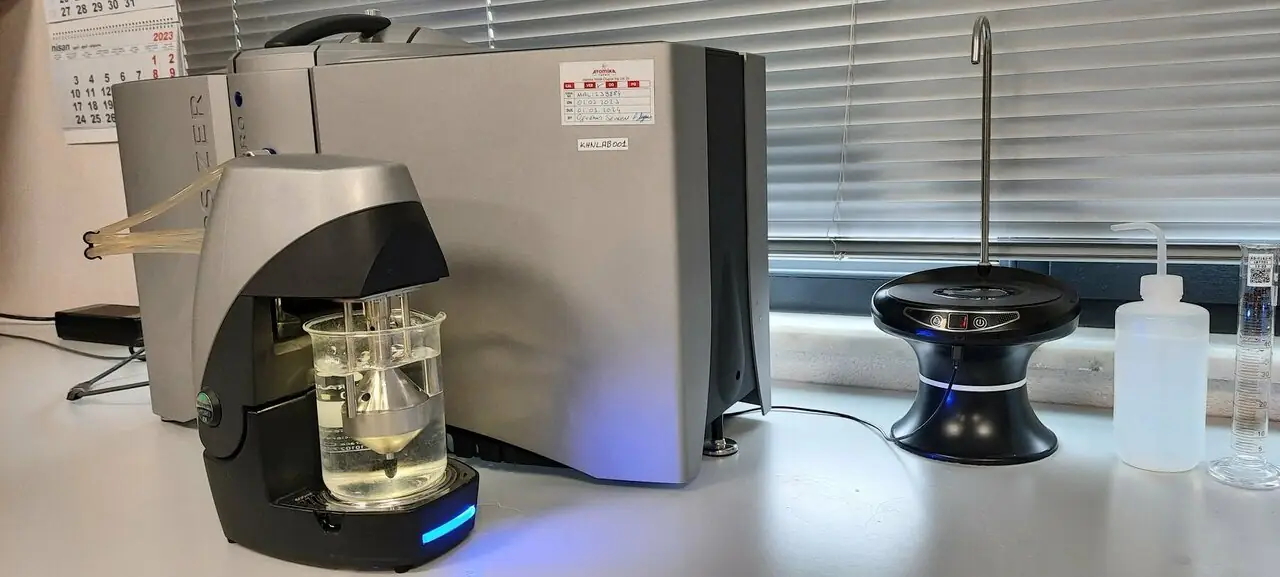
Most mineral producers today use laser diffraction. A sample is dispersed in liquid or air and passed through a laser beam. Particles scatter light at angles that depend on their size, and the instrument calculates the full distribution from that pattern. In our laboratory, we measure the particle size of micronized barite on a Malvern Mastersizer 3000.
Sieving is the older method. It is still used for coarser products and for checks such as the residue on a 75 µm sieve in drilling-grade barite.
Mesh and microns
Mesh describes the number of openings per inch in a sieve. The higher the mesh number, the finer the sieve. Some common conversions:
| Mesh | Opening (µm) |
|---|---|
| 100 | 150 |
| 200 | 75 |
| 325 | 45 |
| 400 | 38 |
For the full table, see our mesh to micron converter.
Why it matters
In paints and coatings, finer fillers give smoother films and help with gloss, while coarse particles can show up as roughness in the dried film. In drilling fluids, API 13A limits both the coarse fraction above 75 µm and the fine fraction below 6 µm, because both affect how the mud behaves.
When comparing products, compare the whole distribution and the measurement method. A single number can hide large differences.
Want the data for a specific grade?
KHN Minerals mines barite at its own licensed sites in Konya and Isparta, micronizes it in Akyazı and tests it in its own laboratory. Tell us your application, grade and volumes.
- 97%typical BaSO4 in our ore
- 3barite mining licences
- 24 htarget reply time