Barium sulphate, graded for the job.
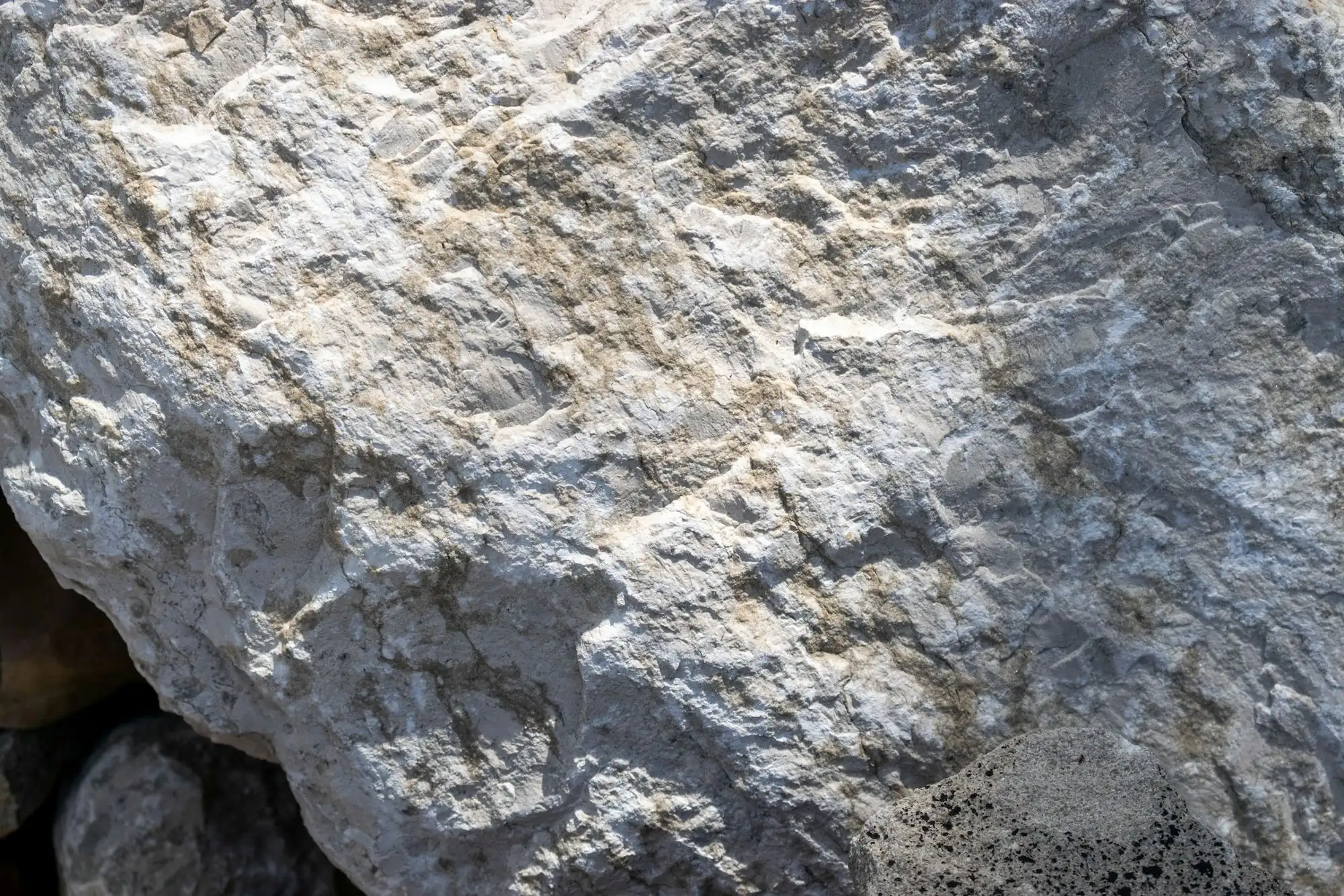
Barium sulphate, BaSO4, is a chemically inert, high-density mineral with a low surface area. We produce it in two lines: micronized grades for paints and coatings, and API barite for drilling.
Micronized barium sulphate
Ground in our micronizing plant in Akyazı to a range of particle sizes. Its low SiO2 content makes it high purity and non-abrasive. Its low Fe2O3 content gives it high whiteness.
| Mineral | Barium sulphate, BaSO4 |
|---|---|
| Grades | High, medium and low brightness |
| Particle size | Several micron sizes |
| Ore | Our own mine sites |
| Milled at | Akyazı plant, Sakarya |
| Checks | XRF, particle size, colour |
API barite
Barite is the most widely used weighting additive in drilling fluids. We offer API barite options for drilling fluid applications.
- 01
Controls pressure
Barite raises the density of the mud and its hydrostatic pressure, which keeps high-pressure zones stable and helps prevent blowouts.
- 02
Allows deeper wells
A well passes through many formations, each with its own properties. The more barite in the mud, the deeper the hole can go.
- 03
Protects the bit
Barite is a soft mineral, so it does not damage the drill bit while drilling.
- 04
Neutral to magnetic tools
It does not interfere with magnetic measurements in the borehole. The American Petroleum Institute sets the specifications for barite in drilling fluids.
Typical composition of our raw material.
Our ore is high in barium sulphate, with very little iron and silica. Those two numbers are what drive whiteness and abrasion in the final product.
| Component | Typical % |
|---|---|
| BaSO4 | 97.00 |
| SrO | 2.00 |
| Fe2O3 | 0.10 |
| CaO | 0.10 |
| Al2O3 | 0.05 |
| SiO2 | 0.02 |
Fe2O3 0.10%
Low iron, high whiteness
Iron oxide is what pulls barite towards yellow. Keeping it low is what gives our micronized grades their whiteness.
SiO2 0.02%
Low silica, non-abrasive
Silica is the hard, abrasive part of many minerals. With almost none in our ore, the powder is high purity and non-abrasive.
Built around your formulation.
Our R&D work never really stops. We run new product development projects together with customers, and with academic partners, to add grades to our range.
Alongside barite, KHN Minerals was set up to work with other industrial minerals such as calcite, kaolin and talc. Ask us about availability.
Frequently asked questions
Short answers to the questions buyers ask us most.
What products does KHN Minerals supply?
We supply micronized barium sulphate in high, medium and low brightness grades for paints and coatings, and API barite for drilling fluids.
Where does your barite come from?
From our own licensed mine sites in Türkiye: an operating mine in Doğanhisar, Konya, over 1,941 ha, and two licences in Yalvaç, Isparta, over 1,800 ha and 1,300 ha.
What is the typical BaSO4 content of your barite?
Our raw material typically contains 97.00% BaSO4, with 0.10% Fe2O3 and 0.02% SiO2. Values for each finished grade are on its technical data sheet.
Where is the barite processed?
The ore is beneficiated at the mine using gravity separation, magnetic separation and flotation. It is then micronized at our plant in Akyazı, Sakarya.
How do you control quality?
We analyse samples from our mine sites by XRF. On the finished product, we measure particle size on a Malvern Mastersizer 3000, colour on an X-Rite 7000, and moisture, oil absorption, ash, density and sieve residue in our laboratory.
Do you sell outside Türkiye?
Yes. KHN Minerals sells in Türkiye and abroad. Contact our sales team with your destination and volumes.
How can I get a technical data sheet or a quote?
Send us your application, the grade you need and your volumes through the contact page or to info@khnminerals.com. We aim to reply within 24 hours.
Tell us what you are making.
Send us your application, the grade you use today and your volumes. We aim to reply within 24 hours.